Unknown's avatar

About Peter Tyldesley

Charity Chief Executive havig a sabbatical, charity trustee, non-executive director, sporadic blogger, grower. This site contains my personal musings and ramblings and the views expressed are my own and do not represent those of any organisation with which I am connected.

Farming Today

For the past year or so, Bradgate Park has had a regular slot on the Ben Jackson show on BBC Radio Leicester (here’s the latest one). I have really enjoyed doing these as part of my drive to make the Bradgate Park Trust more accessible and relateable and to allow the public, for whose benefit the Park was given in 1928, to learn more about how the place is managed and to feel closer to what goes on.

Ben has been doing some work for Farming Today on Radio 4 and, when they wanted a piece on deer, he very kindly thought of us http://www.bbc.co.uk/programmes/b04nr36j


Back in the Beacons (2)

I have been walking in the Brecon Beacons since the early 1990s and, now that we no longer live halfway up a mountain, a trip to see friends in the area is not complete without at least one decent length walk involving a significant hill.

Despite the erosion, the crowds and the sheer familiarity of the area around Pen y Fan, the highest peak in southern Britain, still exerts a magnetic pull. I have climbed ‘The Fan’ in sun, rain, snow and gale force winds, in uniform and in civilian clothes, carrying big weights and no weight, on a tight schedule and with all the time in the world to stand and stare. I have friends for whom Snowdon or Kinder Scout are their spiritual hilltop homes: for me it’s Pen y Fan.

On this occasion I had the chance to be dropped off anywhere along the A470 as Nicola was off to Cardiff for the day, which saved me the perennial hillwalker’s dilemma over where to leave the car and gave me the rare opportunity to take a route up into the Central Beacons that I had not walked before. After that it would be over the top and down the other side by any number of possible routes, depending on the weather and how many miles were left in the legs, to get back to the caravan site at Brynich.

The first mile or so from the roadside to the hill gate was a steady uphill plod through an unremarkable conifer plantation but with the familiar sense of anticipation as the road fell away below and the big skies beckoned.

At the hill gate looking up

So many of the routes in the Central Beacons are either badly eroded scars or have been repaired so as to be paved highways so the prospect of picking a route up the shoulder of Cefn Crew without an obvious path to follow was a refreshing one.

The Beacons, in common with most of the upland areas of Britain, have been so heavily grazed by sheep for so many years that until 2001 little vegetation survived other than close-cropped grass and the ubiquitous and inedible bracken pursuing its relentless march across hillsides where the natural process of succession to scrub and woodland that would shade out the fern were held in check by the heavily subsidised ‘woolly maggots’.

What changed in 2001 was the outbreak of Foot & Mouth Disease. As the infection spread across the country, aided and abetted by the practice of transporting livestock for hundreds of miles by road often as a result of the closure of local markets and abattoirs, ironically caused by the imposition of new food safety standards. As a result, the night skies in these parts of rural Wales were lit up by the flames from enormous funeral pyres as the carcasses of tens of thousands of sheep and cattle, killed not by the disease but by the cull that was imposed by the government in an attempt to halt its spread, were burned .
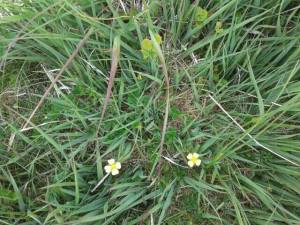
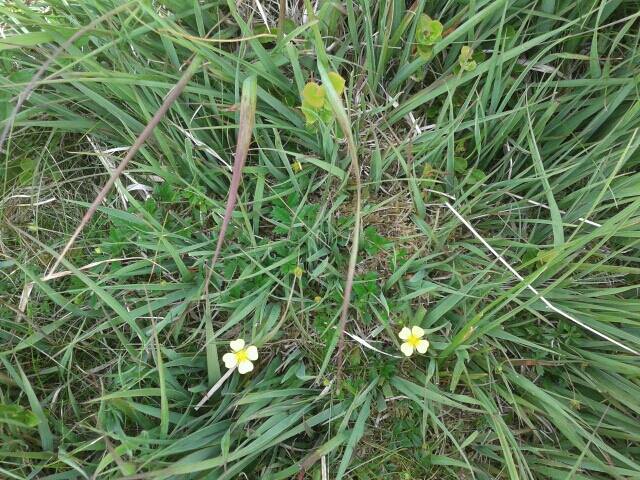
Tormentil and bilberry -signs of reduced grazing pressure

Although the government compensated farmers for their losses, some were so traumatised by the experience of the pyres that they retired from farming altogether. Others took the opportunity of the enforced conversion of their livestock into cash to restructure their farm businesses and diversify. Either way, the numbers of sheep grazing the hills were decimated and did not recover to their pre-2001 levels. In ecological terms, this is the best thing to happen to these mountains in many a long year, although as a result of the predominance of farmers among the membership of National Park Authorities and the pressure on National Park staff to never or say or do anything that might be construed as being critical of the farming lobby, this is a truth that no-one dare speak.

As I continued up towards Blaen Crew and the first of several false summits, the air was full of the song of skylarks and the occasional screech of a buzzard or red kite soaring overhead. The red kite has been one of the great success stories of recent reintroductions of previously native species that had been driven to extinction in the UK by the hand of man, in this case by gamekeepers on sporting estate seeking to stop these raptors taking game bird chicks. When I first lived in Wales, red kites were still so rare that the Army mounted a round-the-clock guard of known nesting sites in Mid Wales. Twenty years later we can see these wonderful birds in the skies over Leicestershire.

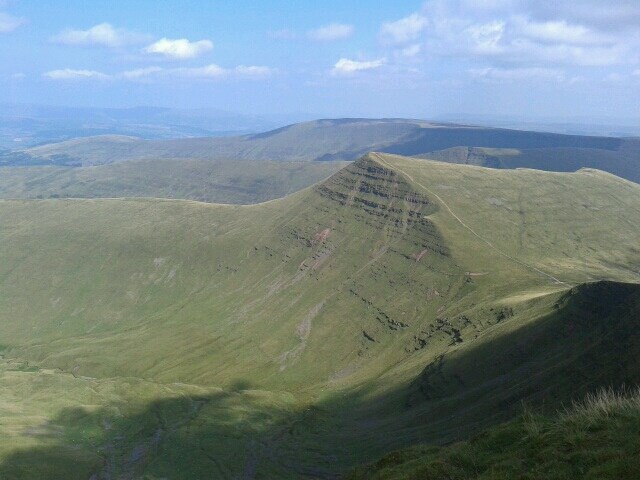
View from the summit of Pen y Fan with Cribyn in the foreground

View from the summit of Pen y Fan with Cribyn in the foreground

Cresting the ridge, I followed the well-worn path around to Bwlch Du Wynt – ‘Pass of the Dark Wind’ – where the wind really does hit you on a winter’s day, but on this occasion the sun was shining and the air was still. From here, the path joins the tourist motorway coming up from Pont ar Daf car park – the shortest, easiest and dullest route up Pen y Fan. I skirted around Corn Du and, after the short final pull up to the top, I was once again standing on the summit of South Wales’ highest mountain, standing a few tantalising feet short of the magical 3,000 foot mark. Avoiding the excited family group posing with a Union Jack on the summit cairn, I took a moment to recall some of the previous times I had stood in this place – with old and bold paratroopers recounting tales of the ‘Fan Dance’, part of SAS Selection and the time I had a soldier collapse with exhaustion and hypothermia and the quickest way to get him off the hill was to kick him over the top and down the other side to the shelter of Cwm Gwdi Training Camp, now long since demolished and the site returned to nature. I have trudged up that hill with 40lbs on my back dripping with sweat despite the freezing fog and have run up it on a summer’s day in T-shirt and fell shoes. This time, thinking about everything that has happened since I last climbed The Fan the over-riding feeling was “I’m back and I’m still alive”.

Windy Gap, on this occasion without the wind

Windy Gap, on this occasion without the wind

The problem with climbing mountains is that sooner or later you have to go back down again. The words of Alfred Wainwright “you may not pass this way again” are always in my mind whenever I turn my back on the view from any summit and start the downward, homeward trek. Picking my way over the scree, my knees and thigh muscles wasted no time in informing me that they were not getting any younger and that, after seven years living back in the lowlands of the East Midlands, Cribyn on this occasion would be a hill too far. I heeded their advice and bypassed the next peak to arrive at the pass where the old Gap Road crosses between Cribyn and Fan y Big. I always think of Windy Gap as a place to shelter briefly from a gale or driving rain and take on some high-calorie sustenance before once again braving the elements to tackle the next summit. I have never before had to seek shade from the relentless sunshine and strongly suspect  this to be a once-in-a-lifetime experience that will never be repeated.

Off the hill and back below the tree line

Off the hill and back below the tree line

All that now remained was to negotiate the loose, stony surface of the Gap Road- painful on tired legs – and to trudge the final few hot tarmac miles back down to the real world.
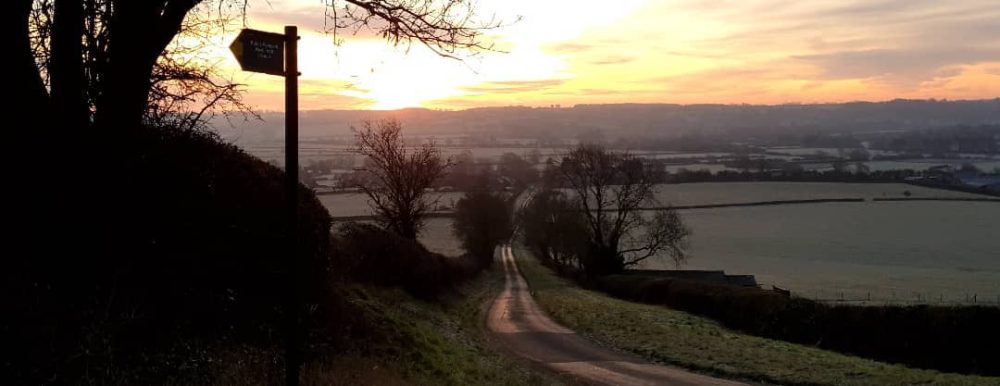
Scotland Says No, Not Just Now

The dust is settling, the sleep deprivation is abating and the hangover is dispersing. Now Scotland has to put the furniture back, push the hoover round, take a trip to the bottle bank and try to remember, with the aid of the embarrassing photos on Facebook and the help of more sober friends, what the hell happened.

What is clear is that an awful lot of people came to the party. A turnout figure of 84% is record-breaking and remarkable and gives the lie to the oft-repeated assertion that political apathy is a fact of life in the UK, that because we have had universal adult suffrage since 1928, the novelty of voting has worn off. On the contrary, the level of voter engagement in the #IndyRef has made it clear that, when they feel they are being presented with a clear choice on an issue that they feel is important to them, people do want to engage and have their say. The challenge to the Westminster parties is clear – how can they move more of their constituents from “Don’t vote, it only encourages them ” and “Why bother? They’re all the same” cynicism to the type of passionate participation that was evident in Scotland in the run up to the 18th September and on polling day itself?

On the other hand, the prospect of 84% of the electorate paying close attention to what is being said and done at Westminster, forming a considered and informed view and then turning out to pass judgement on what they have seen and heard must be a terrifying one.


Back in the Beacons

caravan

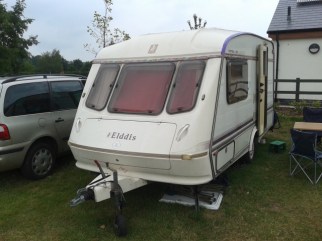
Our little tin box on wheels

At the end of July we took the caravan to Brecon for a week to revisit some old haunts and catch up with old friends. Now I have to admit to having changed my opinion of caravans over the past couple of years. Whereas my views previously verged on the Clarksonesque, I do have to admit that our little tin box on wheels offers many advantages over our previous portable holiday accommodation of choice, the trailer tent. For a start the bed is a lot more comfortable, especially on this trip as, following an unfortunate incident where one of the cats got locked in the caravan a few days before we left home, the tin box’s sofa/bed cushions were unusable so we took the mattress off our bed instead. The other great improvement is that, instead of spending the best part of an hour wrestling with poles and canvas, usually in a howling gale or driving rain, arriving on site involves driving in, unhitching the caravan from the car, winding down the four legs and putting the kettle on. Caravanning is not sexy, it’s not cool and it’s not glamorous but then neither am I and, what is more, I have got to an age where comfort is becoming an increasingly appealing alternative to all the above.

The main aim of this trip was to catch up with old friends and that started with our choice of base for the week. In 2004, when I first started work at the Brecon Beacons National Park Authority, I lived for two months in a cottage at Brynich Caravan Park .I had been getting increasingly desperate in my search for somewhere to live between starting work and buying our own place once the family moved down to join me and enquired about pitching  tent on the site for two or three months over the summer. Fortunately, they had a vacant staff cottage, which the owner, Colin Jones, kindly offered to me at the same rent per month as I would have had to pay for a week at holiday cottage prices. I shall always be grateful to Colin for this act of generosity and the month that we spent with six of us crammed into the tiny three-bedroom house remains a cherished family memory. Colin and family have since sold the caravan site to the Caravan Club and, as a week at Members’ rates plus the membership was cheaper than staying at non-Members’ prices, we signed on the dotted line.

Sunshine over Brecon

Evening sunshine over Brecon

We have stayed on a Caravan Club site in the past so knew what to expect: high standards of cleanliness and presentation, a list of rules as long as your arm and an atmosphere of suburbia transplanted to the Welsh countryside, right down to net curtains, chintzy ornaments and people not speaking to their neighbours. Never mind; we had picked the site for its convenient access to Brecon, which is pleasant mile or so’s stroll down the towpath of the Brecon & Monmouth Canal, rather than for its ambience. However,we did find it a bit strange when we were sitting out on evening enjoying a late supper and a glass of wine and suddenly felt strangely alone. Despite it being a balmy July evening in a beautiful spot, it seemed that everyone else had scuttled back inside their tin boxes, drawn the curtains and were busy catching up with Coronation Street. I half expected the Camp Commandant or one of his lackeys to appear and take us to task for deviant behaviour but thankfully we got away with it.

On the Monday evening we caught up with some friends and former colleagues from the National Park Authority for a drink after work at the extensively refurbished Castle of Brecon Hotel. I have many fond memories of Brecon, having lived and worked there for  total of over five years in two instalments, but tropically warm evenings are not one of them. Sitting outside in the evening sunshine, it was good to catch up and share stories but rather depressing to hear of the constant cuts to services and the struggle for funding in the world of National Parks. National Park Authorities in the UK have two statutory purposes under the 1996 Environment Act: to conserve and enhance the special qualities of the Park and to promote opportunities for people to understand and enjoy those special qualities. Unfortunately, they are constituted as miniature local authorities and spend a huge proportion of their modest budgets on running Planning Departments to enforce the conservation of what are perceived to be the special qualities only without the staffing and resources to do this efficiently and without the Members of the National Park Authority having the democratic mandate to do it in a way that is accountable to local residents. As government cutbacks lead to even fewer resources being made available to National Park Authorities, they cling to these planning powers and commit an ever-greater percentage of the available funding to shoring up an unsustainable situation. There is no reason at all to my mind why, having written the Development Plan and the National Park Management Plan, the business of operating the Development Control system that is at heart a mechanistic process of comparing any planning application to the Plan and then making a decision on whether or not to grant planning permission, could not be put in the hands of the County and District councils within whose areas the National Park is located. This would mean that planning applications are processed by a larger Planning Department that has the resources and economies of scale to do so more efficiently than a tiny National Park Authority Planning Department where one member of staff going off sick is enough to cause disruption and backlogs and decided upon by a Planning Committee made up of councillors elected by the inhabitants of the local area rather than one that consists of nominees and appointees without that accountability.

Dusk falls over Brecon

Brecon Castle at dusk

Bearing in mind this obsession within National Park Authorities about planning and the fact that designation as a National Park is the highest form of legal protection that can be afforded to an area of landscape in the UK, it is more than somewhat ironic that decisions concerning major infrastructure projects, the things that can cause the greatest damage to these precious areas and which National Park status ought to protect them against, are taken away from the remit of National Park Authorities and placed within the gift of central government. Hence the decision in 2006 to route a gas pipeline through the Brecon Beacons National Park in the face of local opposition and the recent announcement by the Government that fracking for shale gas could potentially be permitted in National Parks to add to the presence of a nuclear power station in Snowdonia and a cement works in the Peak District.

As Above, So Below

I am writing this on the 22nd of June, the day after the Summer Solstice. It is now high summer: the days are long and the nights short (in the Northern Hemisphere at least) as the land basks in the life-giving warmth of the sun. This is traditionally a time of celebration and of magic as the faerie folk (or the Sidhe in the Irish tradition) can be seen leaving their homes in the hollow hills to dance and make merry. The period of Midsummer has had special significance in numerous traditions and cultures and it should be no surprise that it is especially important to the people of the far North in those lands that do not see the sun at all for several months of the year. In the Christian calendar, the Feast of St John the Baptist, the precursor of Christ, is celebrated on 24th June (the first day that the sun can be seen to have begun to rise further south after “standing still” at the solstice). The festival of Li, the Chinese Goddess of Light, also occurs at this time.

The whole of Nature seems to be working flat out at this time of year. Birds are constantly on the wing carrying food to their chicks who are growing rapidly as they prepare to leave the nest. The air is alive with a humming throng of insects buzzing busily this way and that as they dart among the abundant flowers in search of the hidden stores of nectar. The June-born fawns are beginning to emerge from the undergrowth and in the hills, where their arrival has not been artificially hastened by modern farming methods, the lambs are still young enough to skip about joyfully under the watchful eye of their mothers.

The Summer Solstice marks the highpoint of the sun’s trajectory through the Northern skies although, because the weather lags a little behind as a result of the time it takes for the land and sea to heat up, the warmest of the summer weather still lies ahead in July and August. However, the sun will now begin his journey South and the days will begin to shorten, imperceptibly at first and then, as we pass the Equinox at the end of September, at a faster rate as the nights begin to draw in and the chill of Autumn can once again be felt in the morning and evening air.

In both Eastern and Western philosophy there is a long tradition of Man being seen as a microcosm of the Universe. The most well-known, if not well understood, example of this is the Hermetic axiom “As Above, So Below” or, as it was originally written: “That which is Below corresponds to that which is Above, and that which is Above corresponds to that which is Below, to accomplish the miracle of the One Thing.” [The Emerald Tablet of Hermes Trismegistus]

This assertion, which has been at the heart of the Western Esoteric Tradition since Plato, enables us to see the life of Man reflected in the turning of the Wheel of the Year and the changing of the seasons.

By Midsummer, the vibrant energy of Beltane has subsided and mellowed. The urgency of late Spring and early Summer, when it seems possible to feel and hear everything around us growing, has been replaced by a more lazy and languid feeling as the lush greens begin to fade to muted browns and the plants shift their energy from growth into setting seed and ripening.

We can see this shift reflected in our own lives. As we approach our middle years the passion and vigour of youth begin to ripen into wisdom and maturity. As the Earth bears fruit from late summer into Autumn, so our best may be yet to come in terms of realising our spiritual and creative potential. There is, however, no escaping the fact that our vital powers and physical strength are beginning to wane, no matter how slowly at first.

The irony of the way in which our youth- and beauty obsessed culture views people of more mature years is that, by discarding experienced workers and generally treating older people as second-class citizens, we are effectively digging up and discarding the plant just as it begins to bear fruit.

As the wheel turns from Summer into Autumn, the land gives up its bounty. Among the fruits of the first harvest is the grain, which has been the staple underpinning of our society ever since our ancestors swapped their nomadic hunter-gather existence for the more settled lifestyle associated with the development of agriculture in the Neolithic period. In Irish mythology the festival of Lughnasadh at the beginning of August was instituted by the god Lugh, in memory of his mother, Tailtiu, who had died of exhaustion after clearing the forests of Ireland for farming.

The next few months, as any gardener or forager will know, are taken up with harvesting a succession of crops and hunting for the fruits of the forest and hedgerow until the last blackberry and mushroom are picked around the time of the festival of Samhain (literally “Summer’s End”) on 31st October.

At that point, just as the icy tentacles of Winter begin to grip the land and the trees and plants retreat within themselves so we, whether for a season or a lifetime, can cease our physical labours and spend our time in contemplation and reflection, preferably in front of a roaring fire with a glass of something warming.

Welcome Break – doing better at Corley

Image

welcome break bins


Credit where credit’s due: after I took Welcome Break to task about their skip at Peartree Services, last weekend I was back on the road again and called into Corley Services on the M6. All the various bins in the main building were clearly marked with some good information about recycling provided for the public. On the way back to the car, I couldn’t resist a sneaky peek in the bin area! This was neat and tidy with recyclables, cardboard and reusable pallets being separate from the general waste destined for landfill.

That’s more like it Welcome Break!

A Reply from Welcome Break

After a 72 hour wait and some gentle nagging on Twitter, I have received a reply:

Mr Tyldesley,

Thank you for your email with regards to the skip at Welcome Break Peartree.

Recycling and waste segregation is important to Welcome Break and therefore any reports of waste being mis-handled is looked into immediately.  As you state Welcome Break has been shortlisted for the National Recycling Awards due to all the work that we have done to help reduce the amount of waste that we as a company send to landfill.

The skip was brought on to site for the purpose of removing old equipment from site that we are unable to sent for co-mingled recycling, as such the skip was never intended to be used for day to day waste.
The other waste that you noticed in the skip has been removed and placed in the correct waste disposal points whether it be for recycling or to general waste. I would like to point out that where possible some of our waste goes for Refuse Derived Fuels (RDF) rather than landfill, enabling
some Welcome Breaks sites to commit to ZERO to landfill.

The Christmas tree that you noticed in the skip has also been removed and given to a local charity.

All our staff at Peartree have been spoken to ensure that they are all aware of the correct procedures for segregating waste, as it appears that on this occasion it did not happen.

I hope that the above fills you with confidence that recycling is important to Welcome Break and we will always strive to ensure that our waste is handled correctly and where possible all recyclable material is extracted leaving only what material we are unable to recycle.

Regards

Natalie

Am I filled with confidence?

Hmm…

Welcome Break Services

We called in at Welcome Break Services on the Peartree Roundabout outside Oxford yesterday and, as you do, had a look in their skip.

The contents included a very interesting mix of old shop stock, which could have been donated to charity to do someone a good turn and raise a bit of money for a good cause, and a large quantity of waste that could have been recycled or, in the case of the old plastic cooking oil containers, reused.

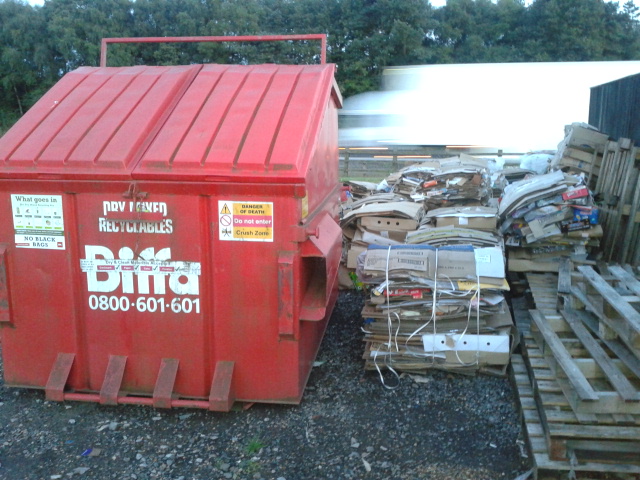
Skip at Peartree Services 24.6.14

I just assumed that this was just another example of someone not being bothered or the usual story of a corporate giving the environment a lower priority than their core business.

However, it turns out that Welcome Break Services have just this week been nominated for a Recycler of the Year Award so I think it is only fair that they be held accountable to a higher standard given that their PR Department will surely be making much of their green credentials in the light of this.

I believe in giving people the chance to redeem themselves so here is the email I have sent to Welcome Break this morning. Let’s see how they respond…

Dear Sir
I called in at Peartree Services yesterday to break my journey from Southampton home to Northamptonshire.

My attention was drawn to a rubbish skip at the rear of the building, mainly because there was a plastic Christmas tree sticking out of it, which is eye-catching in June.

On closer inspection, the skip was filled with a wide range of rubbish and was obviously a “general waste” skip whose contents were destined to go to landfill.

Among the rubbish was a significant quantity of shop stock which, if it was indeed surplus to requirements, could have been donated to charity. There was also a
large amount of recyclable waste which, despite the presence of recycling bins close by on the site, had been dumped in the general waste skip, presumably
because staff had been told to do so or could not be bothered to sort it.

This is particularly disappointing performance for a company that has just been shortlisted for the Retail/Service Sector Recycler of the Year Award and is presumably
happy to attract kudos for its green credentials.

Obviously dealing with your waste appropriately is the correct thing to do from both environmental and ethical standpoints. Given the corporate preoccupation with
“maximising shareholder value” correct separation of rubbish from recyclables reduces in a cost saving as Landfill Tax charges are reduced and recyclablematerial
in bulk is a valuable commodity.

Yours faithfully

Peter Tyldesley

Fruitcakes, Loonies and Climate Change Deniers

The UK Independence Party and its guffawing figurehead Nigel Farage are predicted to make substantial electoral gains in both the Local and European elections that are being held on 22nd May.

While much attention has been focussed on the pontifications of some of its more unreconstructed members on immigrants, women and same-sex marriage, UKIP’s environmental and energy policies show all the hallmarks of having been jotted down on the back of a beer mat as the minutes of a late night meeting in the back room of a Home Counties pub of a focus group consisting of Daily Mail readers and assorted other swivel-eyed loons.

The assertion by Oxfordshire-based UKIP councillor David Silvester that last winter’s devastating floods were divine retribution for the legalisation of marriage for gay couples [1] turns out to be not much less well founded in science than many of the party’s other policies.

The UKIP 2014 Energy Policy is subtitled “Keeping the Lights On” [2]. Having read the document, many will come to the conclusion that “The Lights are on but No-one’s Home” might be a more apt description.

The paper starts with a dig at wind farms, quoting the fact that one particular day in 2010 the contribution of wind to the UK’s energy consumption was 0.04%. Whether that figure is true or not, it is seriously out of date give that there was a 35% increase in installed generation during 2013. If one-off figures for the situation on a single day are to be quoted, then on 21st December 2013, wind generation accounted for 17% of the nation’s total electricity demand [3].

The document then goes on to repeat the myth that wind energy requires 100% conventional generation backup so we are paying twice for every megawatt-hour of wind generation. In reality, all the power stations on the grid – conventional or renewable – provide backup to one another and no new plants have to be built to backup wind power.
By page 2 the focus group had got another round in and were really getting into their stride. “There are increasing doubts about the theory of man-made climate change” they opined. Such doubts may emanate from the lobbyists employed by oil companies and the likes of Lord Lawson’s avowedly sceptical Global Warming Policy Foundation but the scientists of the IPCC feel that they can be 95% confident that human activity is affecting the climate [4] (up from 90% in their previous report). The proportion of articles in peer-reviewed journals that take the contrary view is something like 1 in 9,000 [5]. So, if there are increasing doubts, they are not to be found among those who understood the question.

The party also gives a nod to the idea that more CO2 is a good thing as it stimulates plant growth before launching into some purple prose extolling the benefits of fracking for shale gas – under the heading “safe and clean fracking” – the clincher for UKIP voters of course being that this is good British gas and not the nasty foreign stuff.

The policy concludes with a summary of “What We Should Do”. The list, which would be laughable if it were not for the terrifying thought that many people will believe this stuff, having fallen for Farage and UKIP’s “good old fashioned British Common Sense” shtick, consists of cancelling all subsidies for renewable energy, stopping wind power development, keeping coal-fired power stations, repealing the 2008 Climate Change Act, urgently assessing shale gas potential, urgently building gas-fired generation capacity and basing energy strategy on coal, gas and nuclear.

A better recipe for disaster it is hard to imagine.

References:
1. http://www.bbc.co.uk/news/uk-england-oxfordshire-25793358
2. http://www.ukipmeps.org/uploads/file/energy-policy-2014-f-20-09-2013.pdf
3. http://en.wikipedia.org/wiki/Wind_power_in_the_United_Kingdom
4. http://www.climatechange2013.org/images/report/WG1AR5_SPM_FINAL.pdf
5. http://desmogblog.com/2012/11/15/why-climate-deniers-have-no-credibility-science-one-pie-chart

Inconsistent and Indefensible

The Government today announced that there would be no more public subsidies for new onshore windfarm developments.

It was also announced that future planning approvals for proposed wind energy developments would be placed in the hands of communities and their locally elected representatives and not dictated by Central Government.

Onshore wind is the cheapest form of renewable energy and is zero carbon in operation.

This week the Government also announced a proposal to grant additional rights to companies carrying out fracking for shale gas to extend their operations horizontally beneath the property of neighbouring landowners without the need for consent, thus appropriating the private property rights of these neighbours whose ownership is traditionally in English law seen as extending from the centre of the Earth below to the heavens above their allotted portion of England’s Green and Pleasant Land.

Licences to explore for oil and gas, including by fracking, are granted by Central Government and not the Local Planning Authority.

With the enthusiastic backing of the Prime Minister and Chancellor, a generous tax allowance (subsidy) regime has been put in place for shale gas exploration.

Shale gas, whilst less carbon intensive a fuel than coal, is still a fossil fuel, a non-renewable resource the burning of which adds to the CO2 emissions that are fuelling climate change. In the United States, fracking has been linked with environmental damage, pollution of groundwater, methane emissions, seismic events and adverse human health impacts. In the UK there is widespread public opposition to the prospect of fracking, significant protests in potential shale exploration sites such as Balcombe and Barton Moss which have led to the arrest of a Member of Parliament – Green MP and former Party Leader  Caroline Lucas – who was recently cleared of all charges.

How can any sane individual claim that the Government’s blatantly contradictory stances on onshore wind and shale gas add up to a coherent energy or environmental policy?

Of course…there is an election looming and UKIP are in town and spreading panic in the Tory heartlands. Sanity has been ditched along with all the “green crap”.