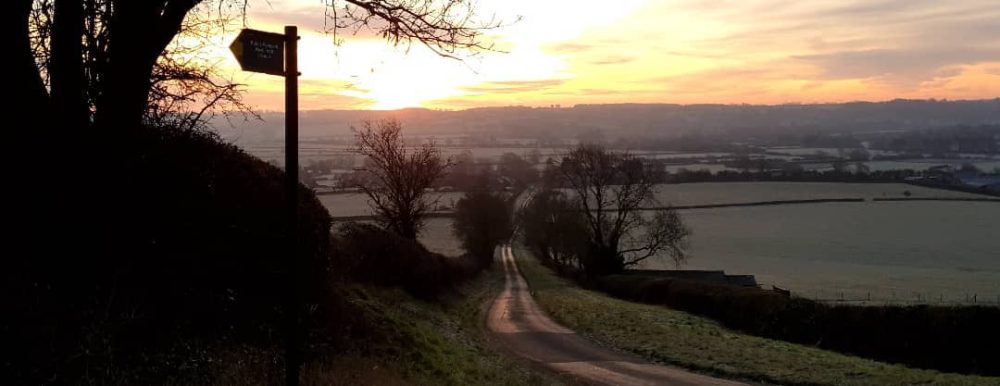
As Above, So Below

I am writing this on the 22nd of June, the day after the Summer Solstice. It is now high summer: the days are long and the nights short (in the Northern Hemisphere at least) as the land basks in the life-giving warmth of the sun. This is traditionally a time of celebration and of magic as the faerie folk (or the Sidhe in the Irish tradition) can be seen leaving their homes in the hollow hills to dance and make merry. The period of Midsummer has had special significance in numerous traditions and cultures and it should be no surprise that it is especially important to the people of the far North in those lands that do not see the sun at all for several months of the year. In the Christian calendar, the Feast of St John the Baptist, the precursor of Christ, is celebrated on 24th June (the first day that the sun can be seen to have begun to rise further south after “standing still” at the solstice). The festival of Li, the Chinese Goddess of Light, also occurs at this time.

The whole of Nature seems to be working flat out at this time of year. Birds are constantly on the wing carrying food to their chicks who are growing rapidly as they prepare to leave the nest. The air is alive with a humming throng of insects buzzing busily this way and that as they dart among the abundant flowers in search of the hidden stores of nectar. The June-born fawns are beginning to emerge from the undergrowth and in the hills, where their arrival has not been artificially hastened by modern farming methods, the lambs are still young enough to skip about joyfully under the watchful eye of their mothers.

The Summer Solstice marks the highpoint of the sun’s trajectory through the Northern skies although, because the weather lags a little behind as a result of the time it takes for the land and sea to heat up, the warmest of the summer weather still lies ahead in July and August. However, the sun will now begin his journey South and the days will begin to shorten, imperceptibly at first and then, as we pass the Equinox at the end of September, at a faster rate as the nights begin to draw in and the chill of Autumn can once again be felt in the morning and evening air.

In both Eastern and Western philosophy there is a long tradition of Man being seen as a microcosm of the Universe. The most well-known, if not well understood, example of this is the Hermetic axiom “As Above, So Below” or, as it was originally written: “That which is Below corresponds to that which is Above, and that which is Above corresponds to that which is Below, to accomplish the miracle of the One Thing.” [The Emerald Tablet of Hermes Trismegistus]

This assertion, which has been at the heart of the Western Esoteric Tradition since Plato, enables us to see the life of Man reflected in the turning of the Wheel of the Year and the changing of the seasons.

By Midsummer, the vibrant energy of Beltane has subsided and mellowed. The urgency of late Spring and early Summer, when it seems possible to feel and hear everything around us growing, has been replaced by a more lazy and languid feeling as the lush greens begin to fade to muted browns and the plants shift their energy from growth into setting seed and ripening.

We can see this shift reflected in our own lives. As we approach our middle years the passion and vigour of youth begin to ripen into wisdom and maturity. As the Earth bears fruit from late summer into Autumn, so our best may be yet to come in terms of realising our spiritual and creative potential. There is, however, no escaping the fact that our vital powers and physical strength are beginning to wane, no matter how slowly at first.

The irony of the way in which our youth- and beauty obsessed culture views people of more mature years is that, by discarding experienced workers and generally treating older people as second-class citizens, we are effectively digging up and discarding the plant just as it begins to bear fruit.

As the wheel turns from Summer into Autumn, the land gives up its bounty. Among the fruits of the first harvest is the grain, which has been the staple underpinning of our society ever since our ancestors swapped their nomadic hunter-gather existence for the more settled lifestyle associated with the development of agriculture in the Neolithic period. In Irish mythology the festival of Lughnasadh at the beginning of August was instituted by the god Lugh, in memory of his mother, Tailtiu, who had died of exhaustion after clearing the forests of Ireland for farming.

The next few months, as any gardener or forager will know, are taken up with harvesting a succession of crops and hunting for the fruits of the forest and hedgerow until the last blackberry and mushroom are picked around the time of the festival of Samhain (literally “Summer’s End”) on 31st October.

At that point, just as the icy tentacles of Winter begin to grip the land and the trees and plants retreat within themselves so we, whether for a season or a lifetime, can cease our physical labours and spend our time in contemplation and reflection, preferably in front of a roaring fire with a glass of something warming.

Don’t Succumb to the Winter Blues

This article was first published in The Magical Times magazine in December 2013

The concept of balance is one that is central to the way in which Nature works. Day and Night, Male and Female, Summer and Winter, Life and Death: all reflect the fact that the best way to define an idea is often in relation to its opposite and that holding these opposites in equilibrium leads to balance and harmony.

It is often said that one of the major differences between our modern Western way of life and that of those indigenous societies that have not become detached from the rhythms of the Earth in quite the same way is our concept of time. The conventional way of visualising time in our culture (just try it!) is as a straight line, always progressing from past to future. Conversely, many tribal societies view time as moving in a circular fashion, living as they do in close contact with the changing of the seasons as the wheel of the year turns and with little concept of material advancement. The first concept of time reflects an obsession with the idea of progress that is absent from the second. Other thinkers have combined these two ways of viewing time into a third approach and express its passage as a spiral, which takes into account both the cyclical and progressive aspects of time passing.

No matter how we may conceptualise time on an intellectual level, there is no escaping the fact that living as we do on a group of islands that lie between 50 and 60 degrees north of the equator of a planet that is tilted some 23.5 degrees away from the vertical and is prone to wobble as it orbits the sun means that the length of the days varies very considerably between summer and winter.

This has been an undeniable fact of life in what we now call Britain since our ancestors first settled here many thousands of years ago. Having evolved in a part of the world where the length of the days hardly changes with the passing of the seasons, early humans had to make lifestyle changes to accompany the more obvious physiological adaptations to their slow migration northwards, such as the paler skins that enabled a more efficient synthesising of Vitamin D from sunlight.

Each year, once we pass the Autumn Equinox the nights begin to draw in as the days grow shorter. The first time that many people nowadays will really become aware of this is the last weekend in October when the clocks go back, accompanied every year by ritual grumbling and confusion over whether they go back or forwards and whether or not we get an extra hour in bed.

Our society has a problem with this onset of the dark part of the year. We do not like the fact that there is less light around for us to travel, work or play in and the long-running debate about the movement of the clocks reflects this. We do not like the fact that the shortening of the days is beyond our control and we want to have the long, light days of summer all through the year. As society has become more urbanised and we have become remote from the changing of the seasons then we have succeeded in almost turning night into day with streetlights, headlights and our incandescent bulbs and fluorescent tubes.

However, our current civilisation is such a brief few words (syllables even) in the long story of human history and evolution that our physical bodies have not yet caught up with what our progress-hungry brains want. We are hard wired to increase and decrease our levels of activity in response to the changes in the length of the days. When our ancestors could not be hunting or foraging as there was little food to be had, Nature let them conserve their energy by resting and sleeping more than in the summer months. When we attempt to live our busy lives at breakneck speed for 12 months in every year we are going against the natural rhythms of life that we have been programmed to respond to for millennia. It is no wonder that so many people succumb to SAD syndrome, the “winter blues” or suffer from one minor ailment after another all through the winter months. We need to slow down and reconnect.

As the trees and other perennial plants withdraw into themselves in order to wait out the cold time, we too feel the urge to do likewise. Many animals take this path as well and sleep through the winter in a state of hibernation that places the absolute minimum demands on their bodily systems consistent with actually staying alive. Of course, a large number of bird species opt out altogether and fly south to overwinter in gentler climes. Although we may be tempted by the prospect of either hibernation or flying south to avoid the winter chill, these are not viable options for the vast majority of us. There are pleasures to be found in wintertime – a brisk morning walk well wrapped-up on a crisp, clear morning or lighting the fire and snuggling up on the sofa on a dark evening – and we are more likely to be able to find and embrace these if we learn to accept the changing of the seasons as a natural, vital and inevitable part of Nature’s way rather than an inconvenience to be battled and overcome. Winter follows summer as surely as day is followed by night and life is followed by death.

This is very much a time of dying. But, as the wisdom of native traditions tells us, that is all part of the nature of existence. If there is no death in the autumn, there can be no rebirth in the spring and no hope for the future. The nature of existence is circular and birth and death, summer and winter, night and day are all points on the same circular path.

Death is the final frontier of human exploration and one that we approach with fear and trepidation. To know and to transcend death has been the objective of mystics and seekers throughout the ages. Whilst we may not be able to do this, to contemplate and to meditate upon death during the dark time of the year is a worthwhile spiritual exercise. To descend in our mind’s eye into the darkness, to be plunged into the cauldron of beginnings and emerge reborn with the experience of the sheer potential of the darkness enables us to fully appreciate the light of inspiration. To experience this divine light, the Awen of the Celtic tradition that is often obscured by the brightness of the summer sun, is certainly to transcend the living death to which the modern world can so easily condemn us. In the darkness, all things are real and everything is possible. It is only in the daylight that our vision is narrowed to that which our eyes can perceive.

To fully understand and appreciate the light, we need to experience the darkness and how different the world looks when viewed through a dark lens. This can be compared to walking through the forest at night: when the sun goes down our eyes, which had relied on the sunlight to see the path, struggle to provide our brains with the information we need and we stumble and trip in the twilight. We slow our pace as we struggle to discern what lies ahead. After a while, our vision adjusts to the darkness and we begin to see the world around us in a different way. The faintest glimmer of moonlight casts shadows from the trees and rocks and reflects brightly off streams and puddles. Our other senses become heightened and we hear and smell things that we would probably never notice in the full light of day. However, it is not the forest that has changed, but the way in which we perceive it, and that is an important lesson to learn if we are to endeavour to live in a way that keep these opposites in balance.

So this winter season, embrace the darkness, immerse yourself in it and learn the lessons it has to teach you. If, like most people today, you do not work on the land or in an occupation that is naturally curtailed by the shorter days, make an effort to slow your level of activity and withdraw a little into yourself. Consider the plants who have taken the energy from the summer sunshine and stored it and now lie dormant ready to burst into life again in the spring. No plant can blossom all year round: they do not have the energy reserves to do so and neither do we. For the sake of our physical and spiritual wellbeing we need to heed the pulse of the Earth as it slows for a while before quickening again as the light returns after the Winter Solstice and life begins anew.

Climate Change and The Wheel of the Year

This article was originally published in The Magical Times magazine in March 2013

As I sit here writing, snow is falling outside my window. It is late January and the world outside is blanketed with a covering of white that is getting thicker all the time. The newspaper headlines are filled with the usual references to ‘The Big Freeze’ and ‘Arctic Blasts’ and their inside pages are devoted to calculating how many millions of pounds the Winter weather is costing the economy. Most workplaces will experience at least one outbreak of recrimination and backbiting about the person who missed work because of the snow while someone else, who lives further away, battled in heroically.

By the time you read this, hopefully Spring will have well and truly arrived. The Snowdrops that pushed their way through the frozen ground at the beginning of February to bring their message of hope and promise of new life will have been followed in their turn by Crocuses and Daffodils. In April the hedgerows here in the Midlands will turn white once again, not with snow this time, but with the Blackthorn blossom, the effect even more striking as the flowers appear before the leaves on bare dark twigs, unlike the Hawthorn blossom in early May which puts the finishing touch to hedges and bushes already clothed in fresh vibrant green.

The period between early February and the beginning of May, between the festivals of Imbolc and Beltane, brings the most intense and dramatic transformation of any three-month period of the year. Within the space of thirteen short weeks, the countryside will change from a bleak, possibly still snow-covered, apparent wasteland of Winter to a verdant landscape that is pulsing with energy and positively bursting with life.

But is this seemingly ageless rhythm being disrupted by changes in the Earth’s climate caused by human activity?

Although not yet accepted by one hundred percent of media commentators or at the top of many people’s lists of worries, where some of us feel it should be, the vast majority of scientists now accept that the natural fluctuations of our climate between warmer and cooler periods have been significantly altered since the Industrial Revolution by the emission of large quantities of carbon dioxide as a result of burning fossil fuels such as coal, oil and gas to power our modern economies and lifestyles. What has been more difficult to agree upon has been the rate at which this global warming is occurring and, when we experience extreme weather events such as 2012 being the wettest year on record in England despite the fact that the early Summer saw warnings of a drought and the imposition of hosepipe bans in many areas, to what extent is this a product of a shift in the climate as opposed to the famously unpredictable British weather.

Research published in the 2011 Journal of Climate suggests that Spring in western North America has been arriving around 1½ days earlier each decade since the 1950s, based on observations of the appearance of plants’ first leaves and blossom. Of these 1½ days, the authors calculate that half a day can be attributed to natural variations in weather patterns and a whole day per decade to the effects of climate change.

Assuming that something similar is happening in Britain and Europe as well, this slow but steady shift will eventually mean that the days habitually allocated in the calendar to the seasonal festivals (Major Sabbats or Cross Quarter Days) of Imbolc (2nd February), Beltane (1st May, Lugnassadh/Lammas (1st August) and Samhain (31st October) become out of sync with the seasonal changes that they traditionally mark.

I think this is a good example of the rhythms of the Earth refusing to conform to our modern human desire to regularise, categorise and allocate them to fixed dates in our diaries. The fact that modern humans are responsible for the changes in the climate that have caused this dislocation just adds a touch of irony to the situation.

The Eightfold Wheel of the Year that is used by many Pagans of today (or “Neo-pagans” if you prefer) for ritual purposes is a modern device that was devised in the 20th Century to divide the year into neat, regular portions and to provide more festivals than history shows were celebrated in any one tradition. There is evidence that all eight festivals were celebrated in one ancient culture or another but the idea of combining them all into a single, regular cycle is undoubtedly modern. This is not to say that there is anything wrong with the Eightfold Wheel – modern Paganism is a young tradition and is as entitled to devise its own ritual system as any other religion. Indeed, “walking the Wheel of the Year” gives a structure and method of connection to the cycle of the seasons to many people’s spiritual practice.

We just need to remember that the Wheel is a device that originated in a time and place where such a regular division of the year happened to fit quite well with the changing seasons so, if the seasons continue to shift, we will need to bear in mind why the Wheel came about in the first place and re-design it accordingly, even if the result is not quite as neat and regular as the original. But, then again, Nature does not seem to be as neat and regular as she used to be and whose fault is that?

Harvest Time

Post originally posted in the Rockingham Forest Druid blog

I am not quite sure where July went: all of a sudden it is the middle of August and the harvest is in full swing.

The old Celtic festival of Lugnassadh was celebrated at the beginning of the month (either the 1st or the 6th, let’s not get into wranglings about the calendar again). The festival is named for the Irish god Lugh, who instigated it in memory of his mother who died of exhaustion after clearing the wild forests of Ireland so that Man could have agriculture. This certainly resonates with those of us who live in parts of the Forest where the trees long since gave way to fields.

Lugnassadh, also known by the Christianised name of Lammas (“loaf-mass”) marks the beginning of the harvest season and is one of three what might be termed “harvest festivals” in the Pagan calendar. At this time we give thanks to the Earth for continuing to nourish and sustain us and we ask for the blessing of the Goddess on the harvests that are still to come – the vegetables in the garden and the fruit in the orchards and hedgerows over the next few months until we reach Samhain and we hope that the harvest is safely gathered and stored as the cold and the dark invite us and the land to rest over the Winter months.

This is a time of reckoning as we reap the fruits, bountiful or meagre, that have been produced by the seeds that we sowed and the care with which we tended them. This is an allegory for what takes place in our own lives; the projects that we began earlier in the year may now be bearing fruit, or not, according to the effort and commitment that we put in. There is nothing that we can do now to change the nature of our harvest. We can only reap what has grown and then, as we enter the time of reflection ushered in by the darkness, decide what we will plant, in our gardens and in our lives, in the coming season and how our cultivation of the crop might be different from this year.

Wilderness or Wasteland

This article was originally published in The Magical Times magazine in July 2013

The concept of wilderness is often defined in a negative sense by what it is not: wilderness represents an absence of orderliness and control by human beings. This failure of Nature to remain within the bounds set for it by people has been viewed as deeply disturbing and somehow indicative of some kind of moral deficiency. In the Bible (Book of Genesis), God gave Man dominion over all the plants and animals of the Earth and the taming of the wilderness and the domestication (or elimination) of wild animals has often been seen as a kind of sacred duty by agricultural societies.

What is referred to as wilderness in Britain is often nothing of the sort but rather a manmade wasteland that has been denuded and impoverished by past forest clearance and subsequent farming practices, usually over-grazing by large flocks of sheep that eat any vegetation that grows and halt natural processes such as recolonisation by trees.

True wilderness, by contrast, is characterised by vitality and abundance as plants and animals multiply until they reach a natural equilibrium. The remaining areas of wilderness on the Earth differ from those places touched and tamed by the hands of people by having complete ecosystems and food chains: a wide variety of plant life is consumed by a range of herbivores who in their turn are preyed on by carnivores both large and small. The British Isles have seen the predators at the top of the various food chains – species such as the bear, lynx and wolf – driven to extinction by the most successful predator ever to walk the surface of the planet: the two-legged one. The ruthless hunting to extinction of our large native carnivores has left Man and his livestock physically safer but, as many people are beginning to realise, spiritually impoverished.

As our material lives have become increasingly contained within safe, neat and orderly boundaries, so our spiritual lives too have shrunk and become controlled, regimented and compartmentalised. Whatever religious or spiritual path we follow, it is easy to allow the stresses and strains of daily life, of earning a living and caring for home and family, to push our practice into a convenient box, where it can be managed like the rest of our lives with the diary and to-do list.

The practice of leaving behind the daily routine, and its associated safety and physical comforts, in search of spiritual growth has a long history in both Eastern and Western traditions. The Buddha achieved enlightenment after leaving behind a life of privilege and meditating for extended periods beneath a Bodhi tree. Many prominent figures in the Judaeo-Christian tradition, such as the Prophet Elijah, Jesus and John the Baptist all turned to the wilderness for inspiration and to hear more clearly the voice of God. Indeed, the entire nation of Israel had to spend 40 years wandering in the desert after fleeing captivity in Egypt before they were permitted to enter the Promised Land.

The Native American Vision Quest is another example of this practice, which seems to reinforce the fact that the use of wilderness to facilitate spiritual awakening and transformation is not confined to a single culture or geographical location but is part of our common human experience. In the Vision Quest the quester spends time alone in the wilderness away from the community, often depriving themselves of food, drink and sleep, in order to see a vision or encounter a spirit guide that will give purpose and direction to their life.

In the Native British tradition, the practitioner of this type of shamanic communion with the Otherworld was the Awenydd, a word which derives from the Welsh word Awen, generally translated as ‘flowing spirit’, which has been described as the inspiration of the Bard or Poet and, by the British Druid Order, as ‘the Holy Spirit of Druidry’.

So we can see that the urge to ‘get away from it all’ and ‘find ourselves’ is not merely a New Age response to 21st Century angst but rather something that has been recognised for thousands of years as a prerequisite to achieving our spiritual potential. From every tradition and every part of the world the mystical experience reported by these wanderers in the wilderness is the same: an overwhelming feeling of unity with all other beings and an insight into the inter-connection of all existence.

This inter-connectedness of the natural world and the individual works both ways and, as we shall see, this idea has a long history.

In the Celtic, and many other traditions, the King was seen to personify the life of the land. In numerous cultures, in the Middle East as well as in Ireland, the King would symbolically marry the land, as personified by one of the land’s patron goddesses. If the union was fruitful and the land provided bountiful harvests, then all was well. On the other hand, a poor harvest or famine would be viewed as a failure on the part of the King or a waning of his vital powers and the only solution was that the King should die in order to be born again in a stronger and more vibrant form, just as the vegetation that grows on the land dies in Autumn and is reborn in Spring.

This connection between the life of the King and the life of the land persisted in the Western Tradition through the Arthurian imagery of the Wasteland. Here the Fisher King has suffered a grievous wound and, while he lies stricken, the land is barren. Only the achievement of the Holy Grail by Arthur’s knights can restore both the wounded King and the land to health once again.

To put this into a contemporary context, if we replace the Fisher King with our modern, consumerist society, the link between the life of society and the life of the land becomes clear. The wounds inflicted by our exploitative, materialistic lifestyles have turned large parts of the land into a Wasteland and, until the Holy Grail of a fairer and more sustainable way of life more in tune with the natural world is achieved, there is no hope for either the King (society) or the land to be made whole again.